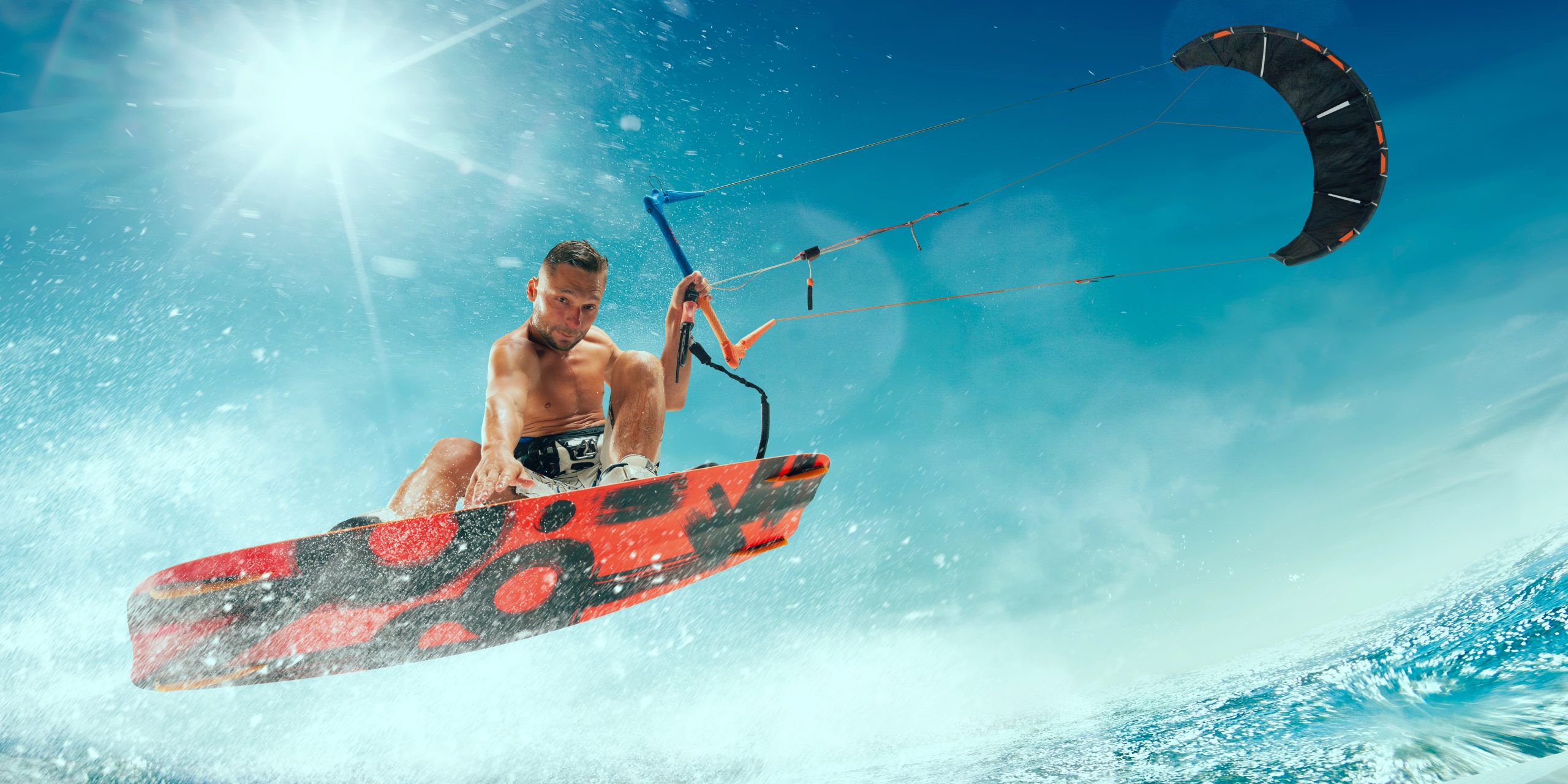

When the Mind Becomes Your Most Important Equipment
My ability to remain calm in adversity didn’t develop overnight – it’s been cultivated through years of facing challenging conditions, equipment failures, and unexpected situations on the water. While technical skills and proper equipment are essential for kitesurfing success, I’ve learned that mental preparation and psychological resilience often determine whether challenging sessions become disasters or breakthrough experiences.
This understanding has become central to my teaching approach and customer consultations. When helping people progress in kitesurfing, addressing mental barriers and building confidence is often more important than upgrading equipment or perfecting technique.
Understanding the Mental Game
Fear and Risk Assessment Kitesurfing inherently involves risk, and healthy fear responses help keep us safe. However, excessive anxiety can prevent progression and reduce enjoyment. Understanding the difference between useful caution and limiting fear helps you develop appropriate responses to challenging situations.
The goal isn’t eliminating fear but managing it effectively. Experienced riders learn to use fear as information about conditions and situations while not allowing it to prevent appropriate progression.
Confidence Building vs. Overconfidence True confidence comes from competence developed through progressive challenge and systematic preparation. Overconfidence, on the other hand, leads to poor decision-making and unnecessary risks.
Building genuine confidence requires honest assessment of skills relative to conditions and challenges. This self-awareness helps you stretch your limits appropriately while maintaining safety margins.
The Teaching Perspective on Mental Preparation
My teaching ability has shown me that mental skills can be developed systematically just like physical techniques. Students who understand mental training concepts progress faster and maintain safer practices throughout their development.
Progressive Mental Challenge Just as physical skills develop through progressive challenge, mental resilience builds through gradually increasing psychological demands. This progression should be systematic rather than accidental.
Stress Inoculation Training Controlled exposure to challenging situations in safe environments helps build confidence for when real emergencies occur. This mental rehearsal develops response patterns that become automatic under pressure.
Positive Visualization Techniques Mental rehearsal of successful sessions and appropriate responses to challenges helps build confidence while improving actual performance. Visualization works best when it’s realistic rather than fantasy-based.
My Problem-Solving Approach to Mental Challenges
Being good at fixing things extends to addressing mental barriers and psychological challenges that affect performance. Many riding problems that seem technical actually have mental components that must be addressed for lasting improvement.
Systematic Problem Analysis When students struggle with specific skills or situations, analyzing the mental components often reveals more efficient solutions than focusing only on physical technique.
Building Mental Toolkits Just as riders need diverse physical skills for different conditions, developing varied mental strategies helps you handle different psychological challenges effectively.
Preparation and Planning Benefits Mental preparation reduces anxiety while improving performance. Knowing you’ve prepared systematically builds confidence that enables better decision-making under pressure.
Condition-Related Psychology
Comfort Zone Expansion Progressive exposure to challenging conditions builds mental resilience while maintaining appropriate safety margins. This expansion should be planned rather than accidental.
Strong wind conditions create different mental challenges than light wind sessions. Understanding these psychological differences helps you prepare appropriately for different environmental demands.
Equipment Confidence Psychology Trust in your equipment affects mental state significantly. When you’re confident in your gear’s reliability and your ability to use it effectively, more mental energy can focus on performance and enjoyment.
Location and Familiarity Factors Familiar locations provide psychological comfort that allows focus on skill development. New locations require additional mental energy for environment assessment and adaptation.
The Honest Advice Approach to Mental Training
My commitment to honest advice means discussing mental challenges realistically rather than pretending they don’t exist or minimizing their importance.
Individual Differences in Psychology People have different baseline anxiety levels, risk tolerances, and confidence patterns. Understanding these individual differences helps you develop mental strategies that work for your personality.
Cultural and Social Influences Peer pressure, social media, and kitesurfing culture can create unrealistic expectations or inappropriate risk-taking. Understanding these influences helps you make decisions based on your actual abilities and comfort level.
Progress vs. Perfection Mindset Focusing on improvement rather than perfection reduces performance anxiety while supporting long-term development. This mindset helps you learn from mistakes rather than being paralyzed by them.
Adventure Psychology and Exploration
My wanderlust and passion for exploration have taught me that mental preparation becomes even more critical when kitesurfing in unfamiliar locations or challenging conditions far from home.
Travel Stress Management Kitesurfing travel introduces additional stressors including equipment transport, unfamiliar conditions, and distance from familiar support systems. Mental preparation for these challenges helps you enjoy travel sessions more fully.
Cultural Adaptation Psychology Different locations have different kitesurfing cultures, safety standards, and environmental challenges. Mental flexibility helps you adapt to these differences while maintaining your safety standards.
Adventure Risk Assessment Adventure travel often involves accepting higher risk levels than local riding. Developing systematic approaches to adventure risk assessment helps you make appropriate decisions about challenge acceptance.
Building Resilience Through Community
Peer Support Systems Local kitesurfing communities provide mental support through shared experiences, knowledge sharing, and encouragement. Building these relationships enhances both safety and enjoyment.
Mentorship and Role Models Learning from experienced riders who demonstrate good decision-making and mental resilience provides models for your own development. These relationships offer guidance for handling challenging situations.
Teaching and Leadership Benefits Helping newer riders develop their skills reinforces your own knowledge while building confidence through competence demonstration. Teaching often reveals gaps in your own understanding that can be addressed.
Stress Management and Recovery
Physical Stress Impact on Mental Performance Fatigue, dehydration, and physical discomfort affect mental performance significantly. Understanding these connections helps you maintain good decision-making throughout sessions.
Recovery and Mental Reset Mental fatigue affects performance just like physical fatigue. Understanding when you need mental breaks helps you maintain good decision-making and enjoyment throughout longer sessions.
Post-Session Analysis and Learning Analyzing sessions for both successes and challenges helps you learn from every experience while building confidence through competence recognition.
The Empathetic Approach to Mental Training
My empathetic nature helps me understand that mental challenges in kitesurfing are real and significant, not weaknesses to be ignored or overcome through willpower alone.
Acknowledging Mental Challenges Recognizing that fear, anxiety, and confidence issues are normal parts of progression helps you address them systematically rather than feeling ashamed about their existence.
Individual Pacing Respect Everyone progresses mentally at different rates based on personality, experience, and life circumstances. Respecting these individual differences prevents comparison-based anxiety while supporting authentic development.
Celebrating Mental Victories Recognizing and celebrating mental breakthroughs helps reinforce positive development while building motivation for continued growth.
Practical Mental Training Techniques
Breathing and Relaxation Methods Simple breathing techniques can reduce anxiety and improve focus during challenging conditions. These skills can be learned easily and applied immediately.
Goal Setting and Progress Tracking Setting appropriate goals and tracking progress builds confidence while providing direction for continued development. Goals should be challenging but achievable based on current abilities.
Pre-Session Mental Preparation Developing consistent pre-session mental preparation routines helps you arrive on the water in optimal mental state for learning and performance.
Technology and Mental Training
Weather Information and Confidence Access to detailed weather information helps reduce anxiety about conditions while improving decision-making. Understanding how to use weather resources effectively builds confidence in session planning.
Video Analysis for Mental Training Recording sessions provides objective feedback about performance while helping you recognize progress that might not be obvious during the experience itself.
Emergency Mental Preparation
Crisis Response Planning Mental rehearsal of emergency responses helps you react appropriately under pressure. This preparation should cover equipment failures, changing conditions, and personal challenges.
Stress Response Management Understanding your personal stress responses helps you recognize when decision-making might be compromised and take appropriate action to restore good judgment.
Conclusion: Building Unshakeable Mental Foundations
The mental aspects of kitesurfing are as important as physical skills and equipment quality, yet they’re often overlooked in traditional progression approaches. My calm demeanor in challenging situations comes from systematic mental preparation combined with honest assessment of abilities and conditions.
Building mental resilience doesn’t mean eliminating fear or discomfort – it means developing the psychological tools to handle these natural responses effectively while making good decisions under pressure.
Your mental training should be as systematic as your physical skill development. Start with basic stress management and confidence building, then gradually develop more sophisticated psychological tools as your experience and challenges grow.
The adventure lifestyle we all seek requires mental resilience to handle the uncertainties and challenges that make adventure meaningful. When your psychological preparation matches your physical skills and equipment quality, every session becomes an opportunity for growth rather than a test of survival.
Remember: mental strength isn’t about being fearless – it’s about being calm, prepared, and confident in your ability to handle whatever challenges arise. This foundation enables progression while maintaining the safety margins that allow you to enjoy kitesurfing for years to come.